
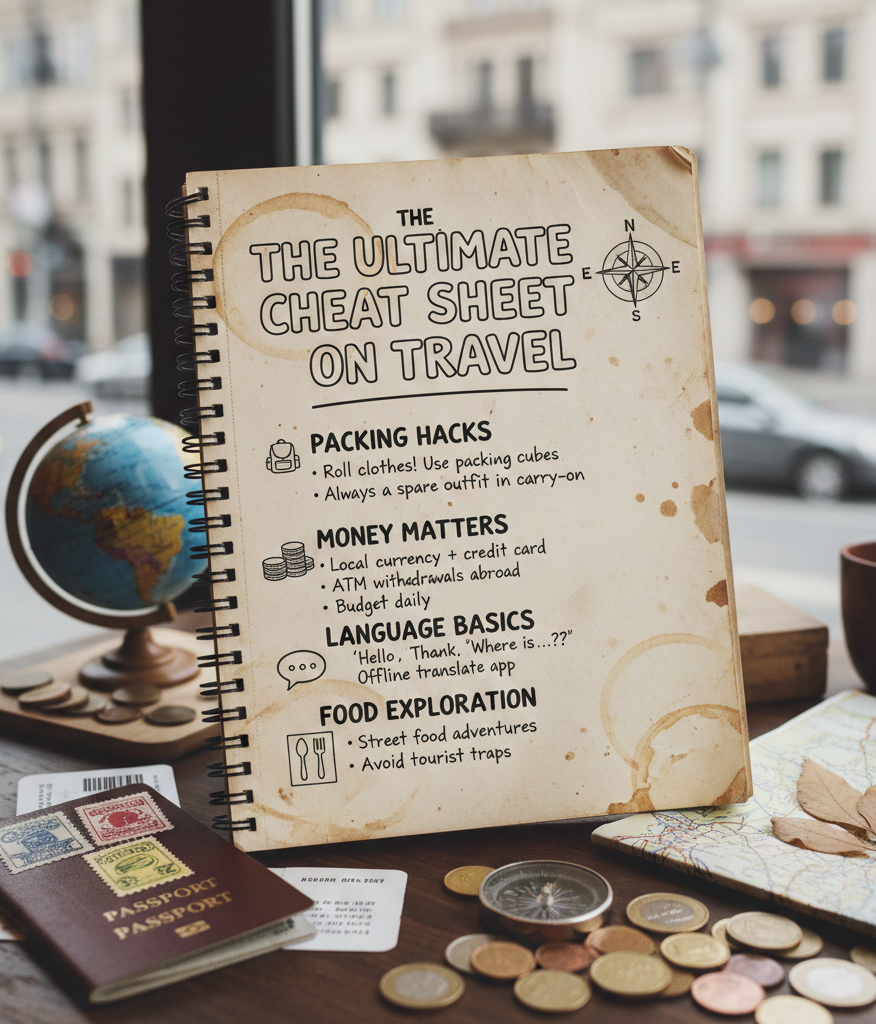

A comprehensive, fast-action guide for smarter, safer, and more efficient travel planning.
Travel has evolved into a discipline that blends logistics, strategy, and personal comfort. Whether you are a first-time traveler or a frequent flyer, navigating decisions on flights, accommodation, documentation, and budgeting can get overwhelming. This cheat sheet consolidates the most critical elements of trip planning into a single high-value reference you can use anytime.
1. Define Your Travel Blueprint
Every seamless journey begins with a clear intent. Determine the purpose of your trip, the type of experience you want, and the time you can allocate.
Core steps:
-
Identify the best season to visit using weather averages and peak/off-peak timelines.
-
Check if your destination requires a visa, e-visa, or visa on arrival.
-
Scan local customs, safety advisories, and cultural norms.
-
Build a Google Maps list for attractions, restaurants, and convenience points.
2. Smart Budget Architecture
Budgeting should anchor your travel choices. A structured breakdown ensures predictability and avoids hidden surprises.
Suggested travel budget allocation:
-
Flights: 35 to 40 percent
-
Accommodation: 20 to 30 percent
-
Food and dining: 10 to 15 percent
-
Activities and excursions: 10 percent
-
Local transport and contingencies: 10 to 15 percent
Pro tip: Track actual spend using apps like Revolut or Trail Wallet for real-time insights.
3. Documentation and Compliance
Travel disruptions often stem from poor paperwork. A clean documentation strategy prevents last-minute stress.
Checklist:
-
Passport valid for at least 6 months from your travel date.
-
Confirm visa requirements and processing timelines.
-
Travel insurance covering medical, baggage, and cancellations.
-
Digital backups of passport, ID cards, hotel bookings, tickets, and insurance.
-
Print one physical copy of every essential document.
4. Bookings and Reservations
Booking smart saves money, time, and frustration.
Flights
-
Use comparison engines like Skyscanner, Google Flights, and Kayak.
-
Consider flexible dates for the best fare visibility.
-
Avoid extremely tight layovers unless the airport is small and efficient.
Accommodation
-
Prioritize location-over-luxury for short trips.
-
Evaluate proximity to transport hubs.
-
Read recent reviews only (past 6 months).
Activities
-
Pre-book high-demand attractions to avoid peak-season queues.
-
Bundle experiences in city passes where cost-effective.
5. Pack Like a Strategist
The right packing method increases mobility and reduces weight-related penalties.
Essentials to include
-
Universal travel adapter
-
Power bank
-
Basic first-aid kit
-
Reusable water bottle
-
Quick-dry clothing
-
Lightweight rain jacket
-
Copies of all documents
Packing systems:
-
Roll clothes instead of folding for space efficiency.
-
Use packing cubes for category separation.
-
Keep a dedicated pouch for liquids to clear airport security faster.
6. Tech Stack for Travelers
Your mobile device can act as your travel assistant if equipped appropriately.
Must-have apps:
-
Flights: Skyscanner, Google Flights
-
Hotels: Booking.com, Airbnb
-
Navigation: Google Maps, MAPS.ME
-
Food discovery: Google Reviews, TripAdvisor
-
Language: Google Translate
-
Currency: XE Currency, Revolut
7. On-ground Efficiency
Once you land, the goal is smooth mobility and situational awareness.
Immigration and airport flow
-
Keep documents ready in one folder.
-
Fill arrival cards ahead if available online.
-
Use e-gates where permitted.
City mobility
-
Understand the metro, bus, or rideshare system.
-
Buy travel cards (Oyster, EZ-Link, Metro Card) for savings.
-
Check local taxi apps for safer pricing.
8. Safety and Risk Management
A disciplined approach to safety ensures peace of mind.
Guidelines:
-
Share your itinerary with a family member.
-
Use hotel safes for passports and valuables.
-
Avoid displaying expensive gadgets in unfamiliar areas.
-
Stay aware of common local scams.
-
Keep emergency contacts saved on your phone and written down.
9. Travel Etiquette and Cultural Awareness
Respecting local norms creates better experiences and avoids unwanted attention.
-
Dress appropriately in religious or conservative regions.
-
Learn basic greetings in the local language.
-
Follow queue discipline and photography rules.
-
Tip only where culturally expected.
10. Post-Trip Optimization
Capture value from your journey even after returning.
Actions:
-
Backup all photos to cloud storage.
-
Track loyalty points for flights and hotels.
-
Write a review for key services to help future travelers.
-
Summarize learnings for future itineraries.
Summary
This cheat sheet provides a structured, operational framework for travel. From planning and budgeting to documentation, safety, and on-ground techniques, it serves as a unified reference for both personal travelers and travel businesses. Use it as a template, a checklist, or a training resource for clients and internal teams.
0 Comment